EN
EN
 FR
FR
 DE
DE
 IT
IT
 JA
JA
 KO
KO
 RU
RU
 ES
ES
 AR
AR
 BG
BG
 HR
HR
 DA
DA
 NL
NL
 FI
FI
 EL
EL
 NO
NO
 PL
PL
 PT
PT
 RO
RO
 SV
SV
 TL
TL
 ID
ID
 SR
SR
 UK
UK
 VI
VI
 SQ
SQ
 TH
TH
 TR
TR
 AF
AF
 MS
MS
 CY
CY
 IS
IS
 HY
HY
 AZ
AZ
 KA
KA
 MN
MN
 MY
MY
 KK
KK
 UZ
UZ
 CS
CS


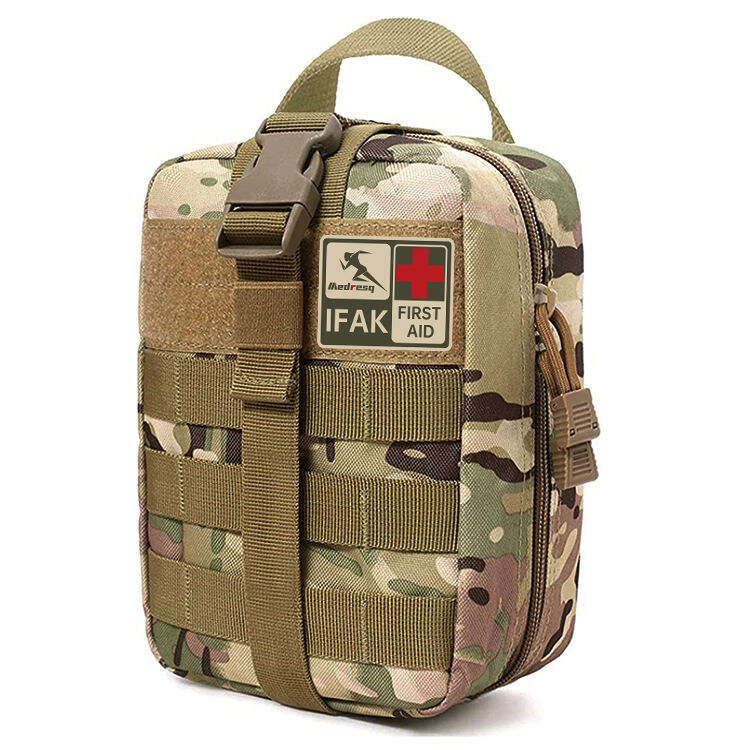
When life is at stake, the equipment that you are carrying should never be the weakest link in your body. To the law enforcers and the military operators, the tactical medic bag is not just a first aid supply carry all, it is a mobile life support system. It must be robust, well segmented and handy in cases of high stress. The issue of having the right bag is a life and death issue regarding the success of the mission and casualty care. At the Anping Guardian Medical Equipment Co., Ltd., we are aware of these specs and we make our gears to survive even in the most devilish battlefield situations.
Key Features to Look for in a Durable Tactical Medic Bag
The hard, medical grade quality bag owes its existence to a combination of durable workmanship, smart design and practicality. And it is not only delivering them, by the way, but safeguarding and getting at during those precious seconds that count. The general construction and the quality of the material is the first thing that should be examined. A bag of high quality must be that of high denier (a denier of high density is a heavier/thicker material) water-resistant material that is able to withstand both wear and tear, the elements and rough-housing on the ground. Every area of high stress should be sutured to double and reinforced stitches.
And the carrying and the closure system at the time. You cannot go on an outdoor adventure without durable and rugged zippers that are easily pulled. The majority of the high end bags possess MOLLE (webbing on the outside). This is important, as you may put another set of medical poches or type of equipment in that system, and tailor the loadout to your profile of a mission. Furthermore, ergonomic handling is vital. Keep an eye out of hefty, padded carry handles; a comfortable shoulder strap (or non-skid, anyway), and even a “drag handle” that you can use in emergency extractions. Finally, some level of internal organization is crucial so contents don’t bounce around and destroy themselves as you move about.
Comparing Popular Tactical Medic Bags: Size, Organization, and Accessibility
Tactical medic bags cannot be considered generalized; they come in different sizes and shapes to fit functions. It is usually a situation of trade off between the number of supplies that one can carry and how fast they can grab them.
Part of the smaller assault packs is intended to be used in conjunction with instant casualty treatment. They must be fast, typically a quick access clamshell that pops open allowing the medic to look and be able to see and access everything in a single action. They prepare their equipment in a way that gives priority to the same intervention as shall be deployed in a MFF i.e. the tourniquets, chest seals as well as hemostatic gauze.
Multi-Mission Bags are large workhorses that are required on long missions. Their internal structure is more complex as they consist of several panels, elastic loops and pockets with zippered edges. This is a complete loadout that can accommodate more than one or two casualties or a bigger medical procedure. They are however not as fast to reach and are to hold more equipment than the assault pack. The concept is to pick a bag of the right size and organizational structure, to activities the operator will undertake (between point-of-injury care to long-period in the field).
How Operators Organize Medical Supplies in Their Tactical Medic Bags
Arranging a tactical medic bag in a good way is an art that comes with time. The concept is to have a design that is intuitive to logical sense such that you can locate what you desire, even in the blackest of nights, through mere touch, or in the low light conditions. The color coded, standardized supplies are a one of the prevailing and successful approaches.
The practitioners place some equipment in sequence of MARCH (Massive hemorrhage, Airway, Respiration, Circulation, and Hypothermia/Head injury) mnemonic. Items that must be obtained at quickest, life threatening things (tourniquets of mass of hemorrhage) are placed in outer pouches or inside the lid itself, stuck to the inside. Airway equipment and chest seals are found in the next easiest compartment. This continuum of care guarantees that treatment is matched to tactical combat casualty care guidelines.
Removable pouches or clear plastic inserts make internal organization a breeze. This modularity does allow for some quick resupply and mission specific customization. Putting similar category products together and then assigning them to individual pouches-for example all in IV stuff in one, or all bandaging in another-helps to keep organization during a response. This methodical packing style and design has made our medical bag contents the top choice among sports teams (who value the quick, easy access to supplies), search and rescue (the labeled bags make the organization easy), and military medics who have to pack their aid station in a carry with them.