EN
EN
 FR
FR
 DE
DE
 IT
IT
 JA
JA
 KO
KO
 RU
RU
 ES
ES
 AR
AR
 BG
BG
 HR
HR
 DA
DA
 NL
NL
 FI
FI
 EL
EL
 NO
NO
 PL
PL
 PT
PT
 RO
RO
 SV
SV
 TL
TL
 ID
ID
 SR
SR
 UK
UK
 VI
VI
 SQ
SQ
 TH
TH
 TR
TR
 AF
AF
 MS
MS
 CY
CY
 IS
IS
 HY
HY
 AZ
AZ
 KA
KA
 MN
MN
 MY
MY
 KK
KK
 UZ
UZ
 CS
CS


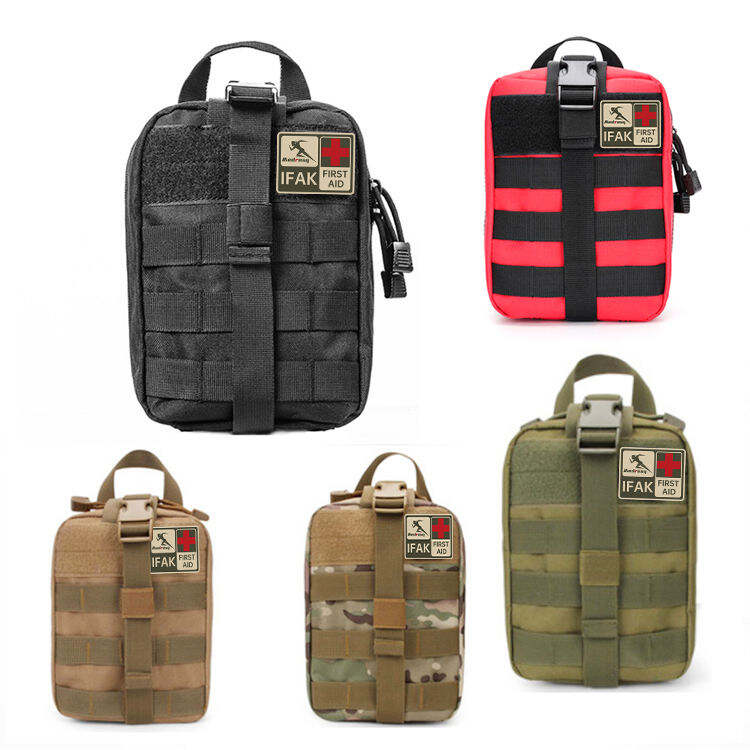
Essential IFAK Components for Trauma Situations
The IFAK is designed to address the cause of preventable combat death, extremity hemorrhage, by including the key components that every Combat Life Saver needs on a daily basis to include a sealed plastic bag. The materials are constructed with this purpose in mind, to enable a user to quickly get into action within those demanding few minutes following an injury. An ideal kit is small, durable and the contents fumble proof under stress.
At a minimum, any decent IFAK should have at least one. For proper bleeding control for extremity wounds that cannot be controlled with direct pressure. It needs to be of an established, dependable design and operable with one hand. Next is Hemostatic Gauze will be vital, this gauze product is treated and causes the blood to congeal quickly if packed into a bleeding wound that is deep. A Chest Seal is also included, enabling you to treat a penetrating chest injury (sucking chest wound) by creating an occlusive seal over any penetrating torso, the most traumatic and fatal type of combat casualty. Pressure dressings are also important for providing continuous pressure to wound sites, and they may feature an integrated windlass for more pressure. Other essentials are rolled gauze for packing wounds and bandages, an emergency trauma blanket to keep the victim warm and prevent shock/hypothermia, and rugged medical shears for cutting away clothing to get at injuries in a hurry. We also know that you cannot take any part in the process for granted and our kits are assembled with those life saving principles at consideration. At Anping Guardian Medical Equipment Co., Ltd. we know there is no room for lax in quality or reliability of each part because each component is so important.
Customizing Your Individual First Aid Kit for Different Scenarios
Although many of these items are applicable to any outdoor adventure, depending on where you're going and what you'll be doing there could be other useful things. Your IFAK is personalized so that you are well-equipped to deal with whatever the world throws at you, whether that mean heading into the great unknown or on road trips.
For an urban or EDC type kit you're sticking to trauma, but might want something like nitrile gloves and a CPR face shield for general safety. The kit, itself, needs to be flat and transportable as well (e.g., a pouch in daypack or car console). For outdoor or adventure enthusiasts, a wilderness IFAK is incomplete without an addition. Think about including a few things like blister care products, a variety of bandages for minor injuries, antiseptic wipes to keep cuts and scrapes from becoming infected while in the backcountry or even a SAM Splint to stabilize sprains or fractures when help is hours away. If you are putting together a kit for a car, space is not as sure of an issue. Larger supplies such as multiple pressure dressings, extra burn gel or even a more detailed manual can be added. The aim for customizing, is adding to the rock solid trauma core rather than cutting pieces away, being ready for anything from the most likely up to worst case.
Best Practices for Maintaining and Checking Your IFAK
But an IFAK isn’t one of those “set it and forget it.” The only thing between you and potential disaster is its operational capability and your ability to use it. Good maintenance is a small habit that will help guarantee your kit works perfectly.
First it’s all about checking your kit. You should have a formal check every 6 months; you may also want to do your own more frequent checks depending on how often you use your kit and how destructive in the elements conditions are. With this inspection, look for any damage to the pouch or its contents. All sealed items (example gauze, chest seals) are still sealed in sterile packaging and have not expired. Outdated materials may not be sterile or effective, and should to be replaced. Second, and no less importantly, is practice and exposure. And having a tourniquet isn’t good enough, you should actually practice getting it to the point of applying it correctly on yourself and someone else so that muscle memory is built. Know what everything in your kit does. Think about taking a certified first aid or Stop the Bleed class to make yourself more confident. Lastly, after use of any kind, immediately replenish your IFAK. A half used kit is no good. If you have the habit of checking, training, and quickly resupplying–your IFAK becomes a valuable tool that can save your life.
Finally, a real IFAK is just that: An intelligently stocked scenario-specific and well-maintained system. What its intended for is to help you quickly and effectively do something good during a traumatic emergency. The moment you buy the kit, in turn investing in good products to fill the bags and making it part of your lifestyle maintenance, and keep up with that maintenance, is when you posses more than just a kit; but confidence.