EN
EN
 FR
FR
 DE
DE
 IT
IT
 JA
JA
 KO
KO
 RU
RU
 ES
ES
 AR
AR
 BG
BG
 HR
HR
 DA
DA
 NL
NL
 FI
FI
 EL
EL
 NO
NO
 PL
PL
 PT
PT
 RO
RO
 SV
SV
 TL
TL
 ID
ID
 SR
SR
 UK
UK
 VI
VI
 SQ
SQ
 TH
TH
 TR
TR
 AF
AF
 MS
MS
 CY
CY
 IS
IS
 HY
HY
 AZ
AZ
 KA
KA
 MN
MN
 MY
MY
 KK
KK
 UZ
UZ
 CS
CS


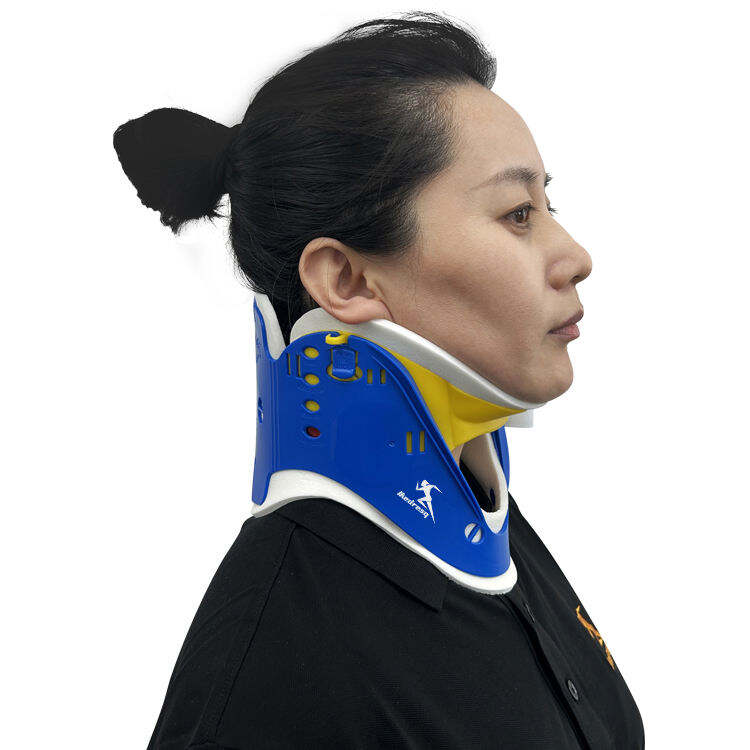
The cervical collar has been an indispensable tool for trauma stabilization, pre-hospital care and post-operative immobility in the past decades. Its main purpose, to limit neck movement and prevent injury to the cervical spine is still the same. But the process of how that critical medical equipment fulfills that mission has also undergone a remarkable evolution. At Anping Guardian Medical Device co ltd we have seen and in many cases helped to create this development doing so from off the shelf, one-size-fits-all hard supports into advanced patient led products focused not only on immobilization but first and foremost patient comfort.
The Legacy of Rigid Collars How Early Designs Shaped Spine Immobilization
The earliest rigid cervical collars are the story of them. These were early collars that led the way in spinal immobilization. Made out of stuff like hard plastic and dense foam, they were solid as a rock. They gave the optimal restriction of movement- critical at that time and till date in case of emergencies where any improper/unnatural movement may further damage the injury.
Traditional firm collars established the benchmark for first-aid treatment. They were developed for fast application by attendants in emergencies, creating an important first level defense of the cervical spine. For a long time, this was the best we had. But as medical science evolved, the inadequacies of a completely rigid structure became clear. The patients frequently complained about discomfort, skin reactions and pressure points after long wear. The single configuration size made for a poor anatomical fit to the majority of patients and could have compromised the same stability it was designed to provide. This acknowledgment of needing improvement in the industry was the foundation for change.
Innovation in Motion The Rise of Adjustable and Low-Profile Cervical Collars
It was this desire for improved patient well-being and greater flexibility in treatment that underpinned the shift of direction in design thinking within the medical equipment industry. Adjustable and low-profile cervical collars subsequently emerged based on these findings. This was a jump from static fixation to dynamic stabilization. In place of the single, hard shell, these new collars frequently have many parts and adjustment devices.
These are cleverly designed – the healthcare professional will be able to 'fit' these to a patients neck and jawline. Adjustable tabs, sizing tracks and modular components allow for an exact fit to provide superior alignment and immobilization without the cumbersome "one size fits all" approach. Another leap forward came in the form of low-profile models. With the decreased collar height and profile around the mandible and occiput, all these designs result in dramatically enhanced patient comfort, lessening of claustrophobia, while offering more peripheral vision. The evolution reflects a realization that good medical care addresses the patient’s entire experience.
Improving Patient Care How Modern Collar Designs Enhance Comfort and Stability
The long-term objective of any development in medical devices is the improvement in patient care, and developments surrounding cervical collar design certainly achieves this. Today’s collar designs create the optimum environment for unmoving support, while keeping comfort in mind. A well-fit, adjustable collar reduces micro-motion within the implant, promoting appropriate healing. by way of an even application of pressure and minimization of friction points, they also contribute significantly to prevent skin breakdown and complications related to long-term wearing.
For the patient this means a less painful recovery. Increased comfort could result in greater patient compliance with medical instructions, less stress and an improved health care experience generally. For the clinician, this flexibility in modern collars provides them with a more accurate tool. They are able to choose a collar with the precise amount of restriction required, from optimal immobilization to more moderate support, according to the individual clinical pathway of each patient. At Anping Guardian Medical Equipment Co., Ltd., we share this philosophy of continual progress to create cervical supports that are not only clinically-effective, but also place the patient at the forefront of their design.